
Whitepaper
Nov 23, 2026
The AI Gender Gap Report: UK leaders’ confidence on gender in AI not matched by action


Credera, in partnership with Male Allies UK, surveyed 501 senior technology leaders at large UK organisations, and found they are confident about gender inclusion in AI. 81% call gender balance in the technology function a business-critical issue, and 98% expect women to have an equal opportunity to lead AI programmes within three years.
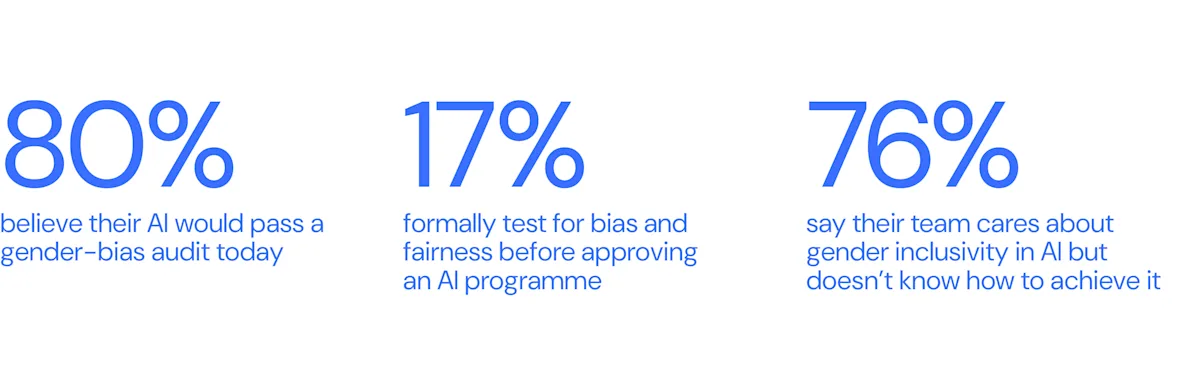
But confidence isn’t the same as evidence. When we asked what leaders actually check, measure and own, a different picture emerged: gaps between what organisations believe and what they do. As AI reshapes who gets hired, trained, promoted and reskilled, those gaps carry real risk for your people, your products and your reputation.


What you’ll learn
In this report, you’ll discover:
The gaps holding back gender inclusion in AI, including between confidence and evidence, measurement and action, and responsibility and accountability
Why the pace of AI adoption is making inclusion harder to prioritise, and how “discussed” gets mistaken for “embedded”
The say–do gap in allyship: how leaders’ personal actions compare with what they believe, and where men and women differ
Practical steps to improve your AI programmes, including AI you buy as well as AI you build
Who it’s for
Technology, data and digital leaders, HR and people leaders, and anyone accountable for how AI is designed, bought or rolled out in their organisation.
Previewed with senior leaders
On 10 November, we shared the findings with senior leaders from technology, financial services, government, retail, energy and the charity sector at a VIP breakfast in London. Henrietta Bennett, Director at Credera, presented the research, followed by a panel chaired by Lee Chambers, CEO of Male Allies UK, with Berenice Levenez (Girlguiding), Clare Ralph (E.ON Next), Kathy Brooke (Bank of England) and author and IT leader Gifty Enright.
One question shaped the room:
“Three years from now, what evidence would convince you that we’ve narrowed the AI gender gap, rather than simply become more confident about it?”
Download the report now:
Download the report


Blog
Nov 23, 2026
The AI Gender Gap – UK Survey: findings from our VIP research preview
On Tuesday 10 November 2026, Credera and Male Allies hosted a breakfast at FORA, Spitalfields, to share the findings of The...

Blog
Nov 25, 2025
Building inclusive tech cultures: Lessons from the Credera x Home Office Women in...
Key lessons and practical steps for building a more inclusive tech industry, drawn from Credera’s latest Women in Tech...


