
Blog
Nov 23, 2026
The AI Gender Gap – UK Survey: findings from our VIP research preview


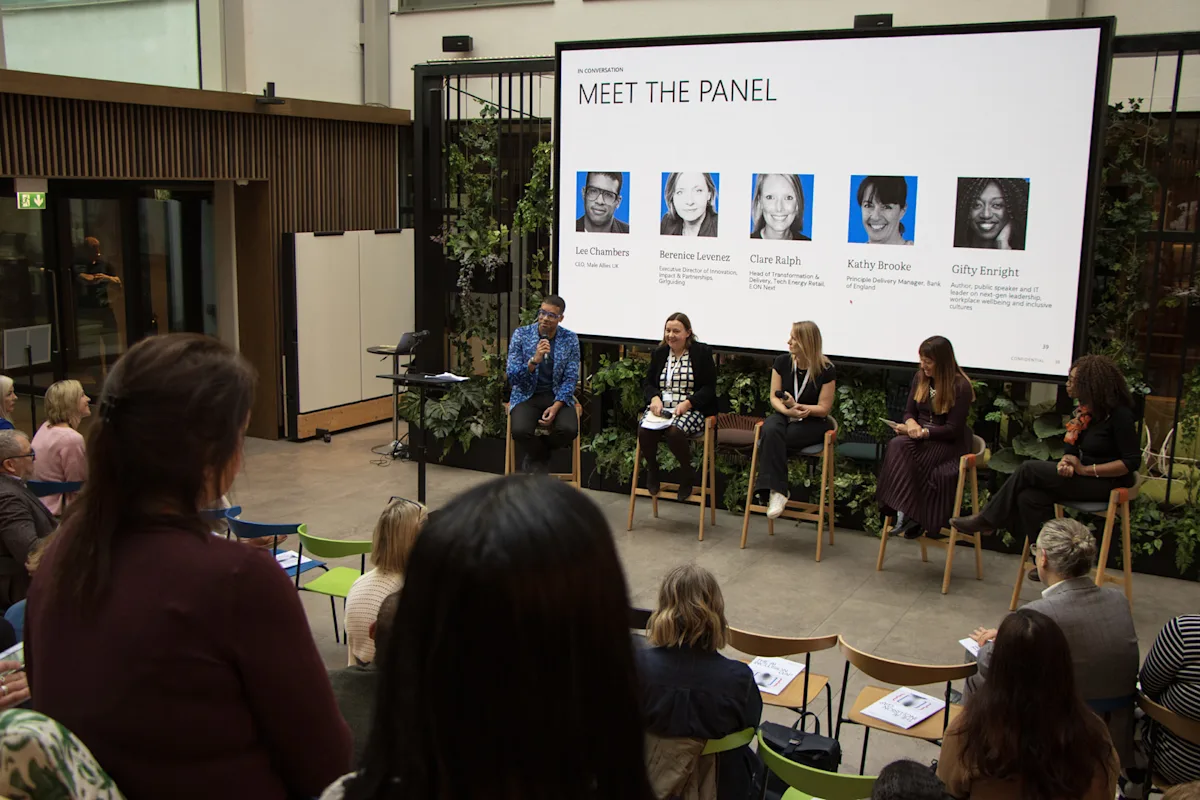
On Tuesday 10 November, Credera and Male Allies hosted a breakfast in London to share the findings of The AI Inclusion Gap with senior leaders before publication. Guests came from technology, financial services, government, retail, energy and the charity sector.
Who spoke
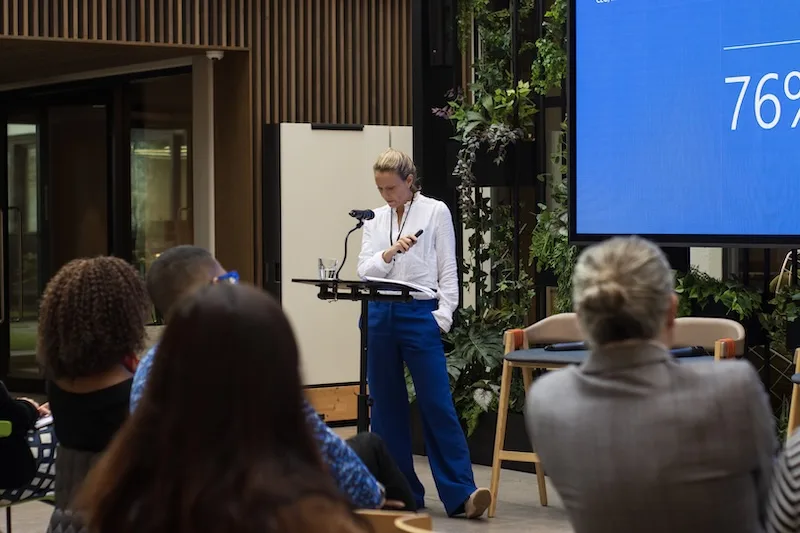
Henrietta Bennett, Director at Credera, presented the research. Lee Chambers, CEO of Male Allies UK, chaired the panel, which included:
Berenice Levenez, Executive Director of Innovation, Impact & Partnerships, Girlguiding
Clare Ralph, Head of Transformation & Delivery, Tech Energy Retail, E.ON Next
Kathy Brooke, Principal Delivery Manager, Bank of England
Gifty Enright, Author, public speaker and IT leader on next-gen leadership, workplace wellbeing and inclusive cultures
As we operated under Chatham House Rules, the panel discussion won’t be shared, but it focused on the themes uncovered in the presentation.


What the research found
We surveyed 501 senior technology leaders at UK organisations with 500 or more employees or revenue above £100 million, across energy and utilities, financial services, retail and consumer goods, and the public sector. The sample was 51% female and 49% male, and fieldwork was carried out by Censuswide. All answers are leaders’ assessments of their own organisations.
Leaders see gender balance as a business issue
81% say gender balance in the technology function is a business-critical issue rather than an HR issue. 98% are confident women will have an equal opportunity to lead AI programmes within three years, and 80% agree diverse AI teams build better AI products.
Representation is moving more slowly. 89% say female representation in tech leadership has risen in three years, but only 31% say significantly. Women most commonly make up 21–30% of AI teams and AI programme leadership.
Gap one: confidence and evidence
Four in five leaders say their AI systems would pass an independent gender-bias audit today. Yet before approving a programme, only 17% test for bias and fairness, 24% assess workforce impact and 27% assess inclusivity of adoption.
Henrietta gave two reasons. 79% say the pace of AI adoption has made inclusion harder to prioritise. And where inclusion is discussed at rollout, leaders can reasonably believe it is embedded, even if it has never been tested.
80% believe their AI would pass a gender-bias audit. 17% formally test for bias and fairness before AI programme approval.
Gap two: measurement and action
92% measure differences in AI adoption between men and women, but only half act on it.
37% have identified the roles most exposed to AI but have no reskilling plan, and 28% know women are over-represented in those roles but leave it out of workforce planning. As these figures are self-reported, the reality is probably worse.
76% say their team cares about gender inclusivity in AI but does not know how to achieve it.

Gap three: responsibility and accountability
When we asked who is responsible for gender representation in AI programmes, answers were split between HR, technology teams and named executives. When everyone has a role, it is hard to say who answers for the result.
Agreement has not turned into personal action
No personal action we asked about, from mentoring or sponsoring a woman to setting diversity requirements for AI hiring, had been taken by more than a third of leaders in the past year. Men were slightly more likely than women to have sponsored a woman for promotion or high-visibility AI work (30% against 22%).
Lee described allyship as a set of skills people can learn: challenging unfair decisions, mentoring and sponsoring, and stepping back so others can lead.
The panel discussion
The panel responded to the findings from their own organisations. Lee’s questions included:
Action seems to be harder than measurement. What questions should leaders ask themselves and their teams to expose false confidence, missing voices or uncomfortable gaps?
Three years from now, what evidence would convince you that we’ve narrowed the AI gender gap, rather than simply become more confident about it?
Three things to do next
Verify. Audit one high-impact system, such as hiring or performance management. Check outcomes by gender as well as the model, and involve the people it affects. If you’re sure it would pass, that’s a reason to run the audit.
Act. Add opportunity to the AI data you already collect: who gets training, stretch projects, AI champion roles and reskilling.
Own. Name an accountable owner for each stage of the AI lifecycle, and hold AI you buy to the same standard as AI you build.
Download the report
The full report sets out the data behind each finding and recommendations for leaders.


