
Blog
Mar 23, 2026
Zero-party data: Giving your customers the personalization they crave


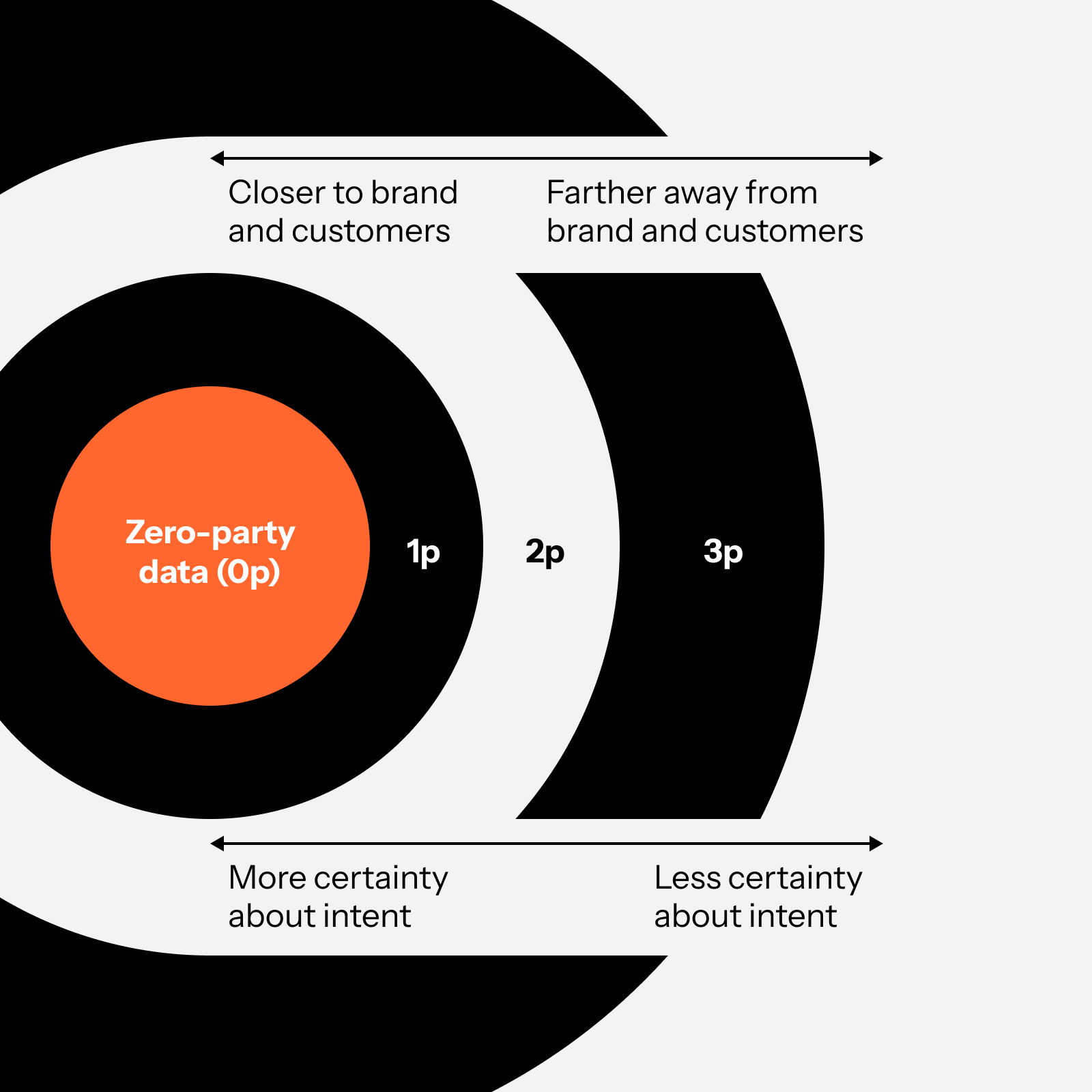
When Forrester coined the term "zero-party data" back in 2018, what was surprising is that no one had named it earlier. After all, there were already three levels of data that a MarTech stack could save and use, each progressively closer to your brand and customers. Yet none of them acknowledged a customer opting into the gathering of data about them.
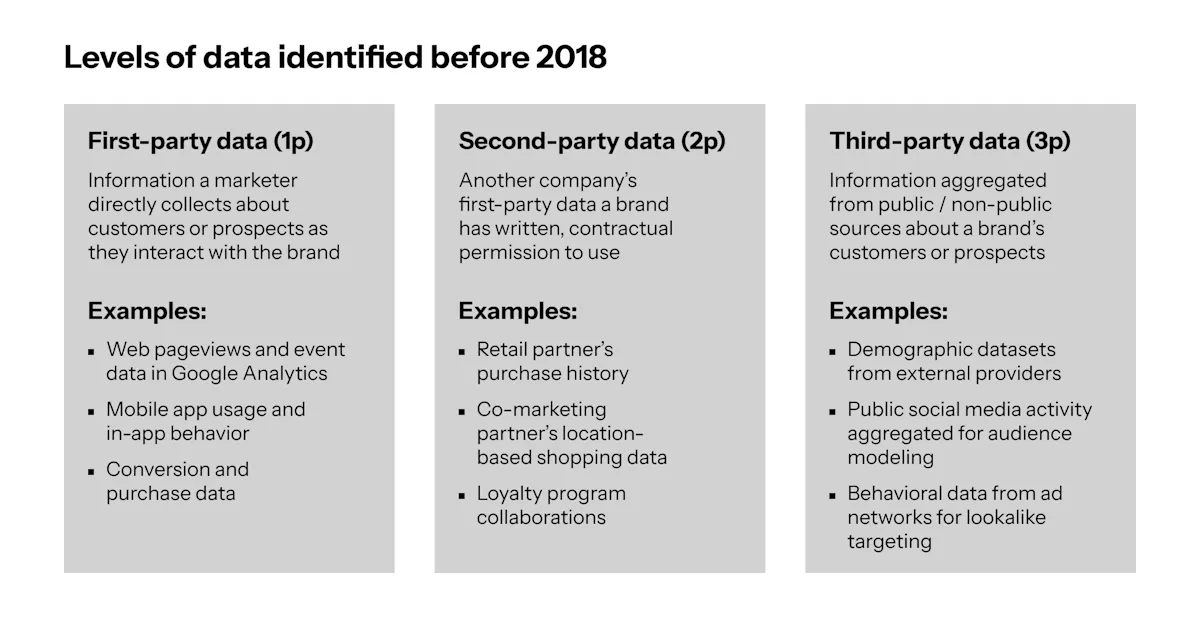

In comparison with the levels defined above, Forrester defines zero-party data as:
Data that a customer intentionally and proactively shares with a brand. It can include preference center data, purchase intentions, personal context, and how the individual wants the brand to recognize them.
In subsequent blog posts, Forrester analysts have pegged zero-party data as a way to "personalize without being creepy."
Why personalization matters, and why ‘creepy’ is the enemy
We can all agree that bad personalization is worse than no personalization at all. So why not simply go about your marketing business without personalizing? The answer lies in what consumers themselves are telling us: Data shows they definitively want personalized experiences.
Consider the results of a 2025 survey by Attentive and CITE Research, in which 2,000 U.S. consumers and 1,500 additional consumers in the U.K. and Australia were surveyed. What they found makes a compelling case for action on two fronts:
A little more than 70% of consumers expect brands to deliver personalized interactions and shopping experiences, meaning more than two out of every three of your customers arrive with that expectation already formed.
There is a measurable cost to not personalizing: 76% of consumers report feeling frustrated when brands fail to provide personalized experiences.
How to not be creepy? Start at zero.


At Credera, we have executed on literally hundreds of personalization strategies over the years using components of the Adobe Experience Cloud. Although many of those engagements focused on first-party data, our clients who were most cautious about how they entered the personalization space opted for consequential zero-party data to drive their strategies.
If you do it right, you cannot go wrong by personalizing on data your customers have volunteered. The additional good news is that the new real-time personalization tools within Adobe's CDP make those personalizations easier than ever to test and roll out at scale.


To bring this to life, the following use case illustrates just how powerful, and how genuinely welcome, zero-party data personalization can be in practice.
Use case: The virtual changing room
Consider a perspective that is far from unique. When a partner is browsing a site for a new clothing option and turns to ask, "How do you think this would look on me?" the response that comes instinctively to many of us is, "I'd have to see it on you."
Not everyone possesses the ability to imagine the fit from a product photo, particularly when the models featured on fashion sites do not share the same body type as the person doing the shopping. The traditional solution has always been a trip to a brick-and-mortar store and a wait outside a fitting room curtain.
This fashion use case asks a straightforward but commercially significant question: How much of a lift in sales-per-visit would result from visitors volunteering information about themselves to see clothing worn by someone who looks like them?
Adobe's AI capabilities make this scenario achievable by generating dozens of versions of the same posed model-in-clothing item, each customized to the general body type and skin tone combination volunteered by the visitor. That opted-in information is precisely what zero-party data refers to, and it is the foundation on which this personalization is built.
The hypothesis being explored is that a more representative visual experience will make virtual shopping measurably more effective and will increase online sales. Adobe's Real-Time CDP (RT-CDP) and Adobe Journey Optimizer (AJO) are both architected for omnichannel personalization, which means the same tools used to validate this hypothesis online can be extended to even more ambitious applications.
The identical personalization logic could serve a shopper evaluating a clothing item in a physical store without access to a changing room, or in a pop-up retail environment where no fitting facilities exist.
GenStudio will take you to the virtual changing room now
Looking further ahead, rather than a shopper describing their physique and skin tone through a preference interface, a more advanced iteration of this experience would allow them to upload a few selfies directly to the site—more zero-party data, completely volunteered—and instantly see themselves in the clothing they’re browsing on their phone.
Are you skeptical that there is a business model for this type of GenAI imagery? Here's a company that would disagree with you.
Meet us at Adobe Summit in Las Vegas to talk more about how to apply zero-party data to your own use cases.

Blog
Mar 20, 2026
Showing how personalization can be a win-win for consumers and marketers
Personalization is key to modern marketing. See how tailored experiences can enhance consumer trust, improve analytics, and...

Blog
Mar 18, 2026
The blueprint for AI-ready personalization: From scattered signals to smart...
Find out why personalization efforts fail and how a disciplined data architecture can power smarter AI personalization and...

Blog
Jun 13, 2025
Leaving ‘spaghetti on the wall’ marketing behind: The shift to Intelligent...
Transform your marketing strategy with Intelligent Personalization. Engage customers effectively by understanding their...
Contact Us
Let's talk!
We're ready to help turn your biggest challenges into your biggest advantages.
Searching for a new career?
View job openings

